Showing posts with label Opel. Show all posts

Saturday, February 26, 2011

2011 Opel Zafira Tourer The Concept Car

Opel Zafira Tourer Concept front view
Opel Zafira concept Tourer makes its world premiere at the Geneva Motor Show 2011 (3-13 March).The concept car combines maximum flexibility in premium feel, which is a blend of functionality and luxury. Opel Zafira Tourer concept is the “living room on wheels”, and a light, airy and high-class quality interior that offers ample space for rear seat passengers.

Opel Zafira Tourer Concept seat front view
The 2011 Opel Zafira Tourer Concept is a panoramic windscreen, which is really the glass roof along the roof to the interior air. Inside 2011 Opel Zafira Tourer Concept is a room for seven passengers with the concept of building Flex7 seating concept, developed by Opel Zafira first. There are many configurations, including a lounge mode that places four spacious business class menu.
Opel Zafira Tourer Concept seat LCD view
Underneath the bonnet of the Zafira Tourer Concept is a 1.4-litre turbocharged four-cylinder engine, offering 103kW of power and 200Nm of torque – an engine also seen in the Chevrolet Cruze and Chevrolet Volt.
Opel Zafira Tourer Concept behind view

Friday, June 18, 2010

Opel GT

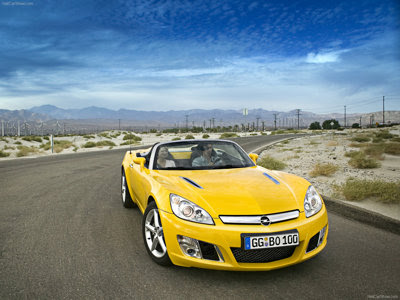
Opel GT 2007The modern definition of an athletic two-seater finds its form in the new Opel GT. As a classic roadster, it has a powerful front-mounted engine, rear-wheel drive, a cockpit with sporty instruments and a tailor-made fabric roof. With a wide stance, sleek silhouette, long, front-hinged hood and short overhangs, the proportions are typical of this class. The Opel GT also brings new charm to this genre with its own unmistakable personality thanks to its exciting shape, which contrasts sharp edges with curved surfaces to create a dynamic look, and its configuration, which enables a refined driving experience, even on long journeys. The GT's pricing is also attractive. For 30,675 euros (recommended retail price in Germany incl. VAT), customers get no less than 264 hp from the high-tech turbo engine with gasoline direct injection. Acceleration from zero to 100 km/h takes less than six seconds. The new two-seater carries its legendary name because it continues the tradition of the first Opel GT (1968 - 1973) and, like the original, competes in one of the most exciting vehicle classes.

The new Opel GT also showcases the brand's passion for dynamic cars, and the conviction that "Opel was never as young as today". This is underlined by niche models with a high fun factor, such as the Astra GTC with panorama windshield, the Tigra TwinTop and Astra TwinTop cabrio-coupés, as well as the high-performance OPC family. They enrich the model portfolio and emotionalize the brand.

The development of the Opel GT is a prime example of transcontinental collaboration within GM. It stems from the decision to expand the concern's portfolio with a compact, rear-wheel drive, sporty vehicle architecture that can be implemented globally. The first step towards realizing this idea was the Solstice concept car in 2002, followed a year later by the Vauxhall VX Lightning concept, which was conceived at the GM Advanced Design Studio in Coventry, England. Strongly inspired by the VX, the Opel GT has been adapted to the current Opel design language at the GM Design Studio in Detroit and the GM Europe Design Studios in Rüsselsheim under the direction of Bryan Nesbitt. The Opel roadster will be built at the Wilmington/Delaware plant in the USA, where its highly successful American GM sister models, the Pontiac Solstice and the Saturn Sky, are also produced.

The new GT's story is reminiscent of that of its classic predecessor. In 1968, the original Opel GT set an automotive manufacturing precedent in Europe when it became the first car to go into production after being debuted to the public as a concept study. The legendary American sports car, the Corvette, made the same start in 1953 in the USA. The new Opel GT shares some engineering characteristics with the current Corvette, such as part of the architecture.

Crisp, dynamic look with strong face

Sharp lines coupled with taut surfaces give the new Opel GT a crisp, dynamic look. Its strong face is dominated by the fender's accentuated sweep, the bold chrome crossbar with integrated Opel logo, the elongated hood with brand-typical center crease, chrome-bordered vents and bold 3-D headlamps in clear glass look drawn deep into the side panels. The GT's especially sporty characteristics include the long air vents in the hood, the grooving in the front fenders with their dynamic, Opel-typical horizontal contours − like on the Antara −, the double-pipe exhaust system and the twin air scoops behind the head restraints, which are reminiscent of designs from roadster and motor sport history. 18-inch aluminum wheels in new five-spoke design fill out the wheelarches, and emphasize the roadster character, as does the fabric roof, which completely disappears beneath a cover for open-top driving fun.

Chrome-ringed instruments in the cockpit clearly display all important information, while black piano lacquer and chrome finishes accentuate the high-tech nuance of the surface structures. These all combine with optional leather seats with visible stitching to highlight the sporty ambience. The short gear stick adds significantly to the driving fun: directly connected straight to the roadster's five-speed transmission, its short gear travel enables quick gear shifts from the roadster-typical seating position.

High-tech turbo engine with direct injection and variable camshaft phasing

The new Opel GT does not just look quick, it is quick! Its longitudinally front-installed 264 hp engine with turbocharging and gasoline direct injection accelerates the roadster to 100 km/h from a standing start in just 5.7 seconds, and up to a top speed of around 230 km/h. "When it comes to high-performance roadsters, there is no better balance between price, driving enjoyment and fun," says Alain Visser, Executive Director Sales and Marketing, Opel. There's no question about it: no other Opel has ever produced 132 hp output per liter. The new Opel GT's engine not only complements the car's dynamic look perfectly, it also far outperforms today's other roadsters and most two-seat sports cars.

High-tech features such as gasoline direct injection, twin-scroll turbocharger with intercooler, double camshaft phasing and twin counter-rotating balance shafts provide the basis for the 1998 cm3, four-cylinder engine's impressive performance data. Maximum output of 194 kW/264 hp at 5300 rpm and high torque plateau of 353 Nm between 2500 and 5000 rpm ensure plenty of power in all situations. The GT requires an average of 9.2 liters of super unleaded gasoline per 100 kilometers. Jointly developed by GM Powertrain engineers on both sides of the Atlantic, the all-aluminum ECOTEC unit is based on the 2.2-liter direct injection unit available in the Vectra model range since 2004, and on the 2.0-liter turbo induction unit, which debuted in the Vectra GTS in spring 2003.

Chassis with classic sporty configuration

For the Opel GT, engineers designed a classic, sporty configuration based on a rigid chassis, wide track (front/rear: 1543/1561 mm) and long wheelbase of 2415 mm: all four wheels are suspended from twin A-arms made from forged aluminum, the center of gravity is low, and the weight distribution of 51:49 percent (front/rear) is well balanced.
A manual five-speed transmission with sporty, short gear travel and limited slip differential provide propulsion power. A torque beam between the transmission and rear axle suppresses reactions to acceleration/deceleration effects.

While disk brakes on all wheels, ABS, Traction Control (TC) and the Electronic Stability Program (ESP) monitor safety, the driver can control the level of ESP and use of TC himself. Both systems are fully active after ignition, with the setup providing driving fun but also keeping the vehicle stable within the physical limitations. At the touch of the ESP button in the instrument panel, the Traction Control (TC) is switched off, but ESP remains active and intervenes as soon as the yaw angle exceeds certain thresholds. Two short presses change the ESP's calibration to a sportier mode and keep the Traction Control (TC) deactivated. Pushing and holding the ESP again for around ten seconds until the "ESP Off" symbol illuminates, completely deactivates ESP and TC. A short press of the button in any mode returns the two systems to their normal states, which also occurs automatically with each new engine start. A display and control light in the instrument panel keeps the driver informed about the current status of both systems.

Stiff vehicle structure with center tunnel and side members

The typical roadster vehicle architecture was designed from the beginning to meet the special demands of an open-top, two-seat sports car without compromise. The vehicle structure, which consists of hydroformed side members and a supporting center tunnel made from drawn sheet steel, provides a solid basis for the car's precise handling and passive safety. The hydroforming forging technique, in which components are manufactured from steel with the help of high water pressure, is already employed in automobile construction for chassis components in the Opel Vectra and Astra.

Only the legendary American Corvette sports car is also based on hydroformed side members. But the Opel GT also breaks new ground in another regard: the GT model family belongs to the first car line produced in significant numbers to have numerous exterior parts made using a procedure that is relatively time-consuming, but provides designers with greater creative freedom. The hood is one example: thanks to unconventional hydraulic technology − known as super forming − the long hood section with its front hinges was optimally integrated into the roadster's silhouette without a gap between the hood and fender.

Sunday, May 30, 2010

Used Cars Opel Meriva

Cars Sale Opel MerivaCars Sale Opel Meriva

Cars For Sale Opel MerivaCars For Sale Opel Meriva

New Cars Opel MerivaNew Cars Opel Meriva

Used Cars Opel Meriva

Tuesday, February 23, 2010

Monday, February 22, 2010

Sunday, February 21, 2010

Friday, January 8, 2010

Opel Meriva 2010


Post by: Automotive

Innovative, versatile and elegant: The second generation Opel Meriva, to premiere at the 2010 Geneva Motor Show, will set the new standard for automotive versatility with a multitude of innovative features engineered to optimize the flexible use of space. And it is all packed in a distinctive, contemporary design.

After pioneering automobile on-board versatility with the compact seven-seater Zafira in 1999, Opel created a new market segment for small, affordable monocabs when it launched the first generation Opel Meriva in 2003. With its revolutionary FlexSpace rear-seating concept, high seating position and roomy cabin, the Opel Meriva was big on flexibility yet small in size. This popular formula has enabled it to consistently lead the small monocab segment, with sales in Europe totaling more than 1 million units.


Now, the second generation Opel Meriva again raises the bar for affordable, on-board flexibility. Its FlexSpace system has been further developed to become even more intuitive and easier to use. It also introduces FlexDoors, innovative rear-hinged rear doors that facilitate access to its cabin - a premiere for a volume manufacturer. Moreover, the new Meriva features great interior storage space enhanced by a revolutionary concept of flexible center console, as well as the Opel-exclusive FlexFix system - the integrated rear bicycle carrier that is stored like a drawer under the luggage compartment.

The Opel Meriva's flexibility trademark is enhanced by expressive exterior and interior styling that carries forward Opel's award-winning new sculptural design language. Its monocab silhouette is fluid, elegant and dynamic. The rear window graphic features a distinctive wave accentuating the rear-hinged FlexDoors, improving the view for rear seated passengers, particularly children.

The new reference in on-board versatility

"With the Opel Zafira Flex 7 and the Meriva's FlexSpace seating concepts, we invented a new kind of fully integrated, on-board flexibility," says Alain Visser, Vice President Sales, Marketing and Aftersales Opel/Vauxhall. "With the new Meriva, we wanted to engineer the new versatility champion in the automotive industry. I don't see any other car offering so many ideas that make one's life easier."

Increased flexibility is extended to all areas in the new Opel Meriva. In the cabin, the innovative FlexSpace rear seating system introduced in the first Opel Meriva has been further developed: It requires even less effort to move the seats in their different positions or to fold them down.

Throughout the cabin, storage space is considerably increased with convenient locations provided for items commonly carried inside a car. The revolutionary FlexRail console system consisting of exchangeable storage units that can slide on rails located between the front seats provides convenient and adaptable storage for any kind of use.

Up front, the generously proportioned seats are similar to those of the new Opel Astra and Insignia. They offer a class-leading range of adjustment - 240 mm forwards/backwards and 65 mm in height - allowing people of all size and age to find optimal comfort for their journeys. Also new for Opel Meriva is the availability of Opel's unique FlexFix integrated rear bicycle carrier.

Entering into a new era of doors

Opel Meriva opens up a new dimension in rear seat access with unique rear-hinged rear doors. The FlexDoors concept is a first from a volume manufacturer in the industry. Unlike the few well-known rear-hinged doors systems available, FlexDoors features full-sized doors which open independently without the need for a clamshell overlap by the front doors. A conventional B-pillar makes this independent opening possible, while ensuring good body rigidity and side impact protection. In addition, it has a handle that further facilitates entry and exit.

FlexDoors provide great functionality by making it easy to get into and out of the rear seat. Locating the door hinges on the C-pillar also allows more clearance for passengers' feet to swing past the B-pillar flange. The FlexDoors also open up to 84 degrees, much wider than conventional doors, for which 68-70 degrees is the usual standard. Front passengers also benefit from the same 84 degrees opening angle. FlexDoors are also more ergonomic and convenient for the front passengers to open FlexDoors when stowing a jacket, a briefcase or an umbrella behind the front seat.

FlexDoors also provide greater safety, especially for young families. Parents can reach into the rear seat more easily to help with buckling up, and children can be more safely guided when getting in and out of the vehicle. For example, when both the front and rear doors are open at the same time, a safety zone is created as both child and parent can get out of the car without a door separating them, reducing the risk of children stepping out into traffic.

FlexDoors add style to increased functionality. Stepping in and out of the vehicle not only feels much more natural, it looks cool and elegant. It's no longer necessary to twist or slide out of the rear seat.

The FlexDoors concept has been successfully market tested and evaluated with Opel Meriva customers since 2006. It s supported by an array of patented locking systems designed to optimize safety.

Monocab expression of new Opel design

Inside and out, the Opel Meriva moves forward Opel's new, expressive design language - sculptural artistry meets German precision - and adheres to the same focus on quality already seen on Insignia and the new Astra.

Opel designers created a dynamic and elegant monocab. A lower, sweeping roof-line combined with Opel's signature blade side-body motif and the wave rear window line give the Opel Meriva a fresh, distinctive character and look.

The FlexDoors invite you to an interior landscape of harmoniously flowing lines and surfaces. The wraparound wing shaped instrument panel enhances the feeling of width and roominess. The forward leaning center stack contributes to this and adds a notion of sportiness and sculpture.

The interior is appointed with six different levels of colour and trim. The widest choice ever offered on an Opel. The high standard of fit and finish of the chosen textures and materials as well as the layout and decoration of the controls is typical of more expensive cars.

Opel Meriva to launch with six environmentally friendly engines

The new Meriva benefits from a longer wheelbase, wider front and rear tracks, all contributing to improved handling and greater ride comfort.

The range of powertrains features economical and efficient turbocharged engines offering a power bandwidth from 75 to 140 hp. A particularly economical ecoFLEX version will also be offered. The Opel Meriva will offer a choice of 5 and 6-speed manual transmissions as well as a 6-speed automatic gearbox.

Designed and developed at Opel's engineering center in Rüsselsheim, Germany, the new Opel Meriva will be built in Zaragoza, Spain and is scheduled to go on sale in the summer of 2010.

source : Opel Press

Opel Meriva 2010


Post by: Automotive

Opel Meriva 2010


Post by: Automotive

Opel Meriva 2010


Post by: Automotive

Opel Meriva 2010


Post by: Automotive

Tuesday, September 16, 2008

Opel Verstion of Volt coming In 2011


Opel is coming out with it's own version of the new Chevrolet Volt, a european sister.

"Opel will have a version of the Volt that will look more like an Opel. It will be a close sister to the Chevrolet Volt," said a GM source.

"We are trying to position Opel toward the upper side of the high-volume segments and having the Volt technology will give Opel a competitive edge," the source told Automotive News Europe.

GM aims to launch production versions of the Volt in the US in late 2010. The proposed European variant, the Flextreme, was shown at the 2007 IAA in Frankfurt.

The first models to reach Europe will be supplied from the Hamtramck assembly plant in Detroit, but GM also plans to make the in Europe.